
Jurassic Front: Survival
Joy CritStrategy
4.3469.00 Reviews
- Version
- 1.1.6.9
- Installs
- 100.00K
- Age Rating
- Teen
Screenshots
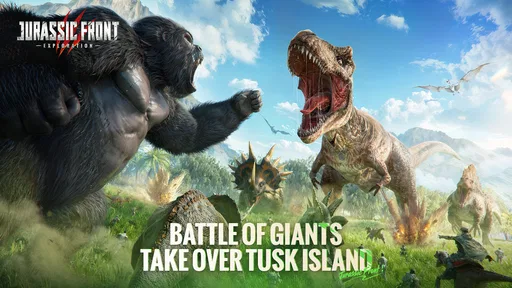
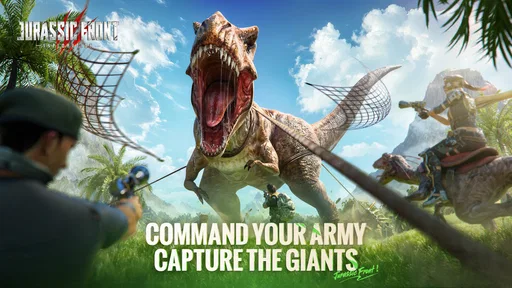


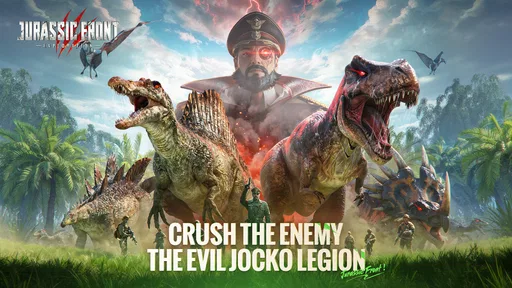
Our Review of Jurassic Front: Survival
 Analysis by Appyee
I spent time with Jurassic Front: Survival as a mobile strategy game and found a title that aims for a broader experience than a simple dinosaur battler. It places its battles in an open-world setting, combining survival pressure with the need to make decisions about command, territory, and timing. That combination gives it a more adventurous feel than a traditional menu-driven strategy game, although it also means the experience can feel less focused if you prefer clean, tightly structured matches.
The game comes from Joy Crit and is available free of charge on Android. Its Teen content rating is worth noticing before installing, especially for younger players or families choosing games together. The current version is 1.1.6.9, and it runs on Android 7.0 or later. That broad operating-system requirement makes it accessible on many older devices, though the actual experience will still depend on the phone or tablet’s performance and available storage.
How Jurassic Front: Survival turns dinosaurs into a strategy challenge
I found that the dinosaur setting works best when I treat each encounter as part of a wider plan, not as an invitation to fight at once. That shift makes the game’s open-world structure easier to approach and helps me decide when a short visit is useful versus when I should wait for more time. The next section looks at how those choices shape the pace of progress.
An open-world approach rather than a simple dinosaur collection
The main appeal is the way the game frames dinosaurs as part of a larger survival conflict. Instead of treating prehistoric creatures only as collectible units or visual decoration, it presents them within a world where battles and expansion matter. I liked that general direction because it gives each decision a little more context: the goal is not merely to win one isolated encounter, but to think about how a victory supports the next stage of progress.
That structure makes the game easier to recommend to players who enjoy strategy with an adventure layer. If you usually play games built around territory, command choices, and gradual advancement, the dinosaur setting provides a welcome change from the usual kingdoms, robots, or modern armies. The theme is doing real work here; it gives the conflict a sense of danger and makes the survival angle feel more natural.
At the same time, this is not the best fit for someone looking for a purely tactical board-game style experience. Open-world presentation tends to bring more movement, discovery, and long-term planning into the loop. I found that appealing, but players who want short, symmetrical battles with no surrounding progression may prefer a more focused strategy title.
What the first sessions feel like
My early sessions were mainly about learning how the game expects me to think. The important adjustment is resisting the urge to treat every encounter as a reason to attack immediately. A strong-looking opportunity can still be inconvenient if it leaves the wider position exposed or consumes resources that would be more useful for a later objective. That is one of the first practical lessons I would give a new player: consider the next decision before committing to the current one.
The dinosaur theme makes experimentation enjoyable, but the strategy comes from weighing consequences rather than simply choosing the most intimidating creature. I found myself paying more attention to the order of actions and the condition of my overall campaign than I would in a lightweight arcade game. That extra layer is where the title earns its place in the strategy category.
A useful routine is to begin a session by checking what you can realistically accomplish in the time available. If you only have a few minutes while waiting for a bus or taking a break, pushing into a complicated objective may create more frustration than progress. When I had longer stretches of free time, the open-world structure felt more rewarding because I could plan, act, review the result, and adjust instead of rushing through one isolated fight.
Free access and the question of value
The download is free, so the initial decision is straightforward: you can try the core experience without paying an entry fee. That matters for a game whose appeal depends heavily on whether its open-world strategy loop suits your habits. I would rather test that fit personally than commit to a paid game based only on its dinosaur theme.
There are in-app purchases ranging from $0.99 to $99.99 per item. I see that range as the most important cost consideration. Free access lowers the risk of trying the game, but the presence of optional purchases means the long-term value depends on how comfortable you are playing without spending and how disciplined you are around the store. I would not judge the game solely by its free download, because the purchase structure can influence how different players experience progression.
For me, the sensible approach is to treat payment as optional until the game has proved that it belongs in my regular rotation. A small purchase may feel reasonable for someone who plays consistently and wants to support the developer, while a larger purchase is much harder to justify without knowing how deeply the game will remain part of your routine. The free starting point is a strength, but it does not automatically make every later purchase good value.
Three practical habits that improve the experience
First, I recommend separating exploration decisions from battle decisions. It is tempting to move through the world with the assumption that every visible opportunity should be handled immediately. I found better results by deciding whether a location supports my current plan before engaging. This simple pause reduces wasted effort and keeps the open-world layer from turning into a series of impulsive detours.
Second, use short sessions for preparation rather than forcing a major confrontation. When I had limited time, reviewing the next objective and deciding what to prioritize was more useful than beginning a battle I could not finish thoughtfully. This is a small but meaningful advantage for mobile play: the game can fit into brief breaks, but the larger strategic decisions benefit from attention.
Third, judge purchases by how they change your actual play rather than by how attractive they look in the moment. Because the available items span from very small purchases to substantially larger ones, I would avoid spending simply to remove a temporary obstacle. A better test is whether the purchase supports a play style you already enjoy. If you are not enjoying the basic command-and-survival loop, buying more content or convenience is unlikely to solve that problem.
Where the game creates friction
The same open-world ambition that gives the game character can also make it feel less immediate. Players accustomed to clearly separated rounds may find the broader structure slower to understand. There is a difference between difficulty caused by meaningful strategy and difficulty caused by not yet understanding what deserves attention; early on, the game can sit close to that line.
I also think the dinosaur setting may create expectations the strategy layer does not always satisfy. If you want a game that is primarily about collecting creatures, watching them grow, or enjoying constant spectacle, this may feel more demanding than expected. The creatures are part of a command-and-survival framework, so the player’s decisions matter more than simply having the most impressive-looking dinosaur available.
The free model is another possible source of friction. Even when a player intends to spend nothing, seeing purchase options can affect the sense of progress. My advice is to decide on a personal rule before playing: either remain free-to-play and accept a slower pace where necessary, or set a modest limit that you are genuinely comfortable with. That makes the value question easier to answer and prevents an enjoyable strategy session from becoming an unplanned expense.
Who will get the most from it?
I would recommend this game to someone who likes strategy but wants a stronger theme than abstract maps and anonymous units provide. The dinosaur setting gives the battles an immediate identity, while the open-world structure encourages planning beyond a single encounter. It is especially suitable for players who enjoy returning to a campaign, making gradual decisions, and learning how to use limited opportunities more effectively.
It can also work for mobile players who alternate between short and longer sessions. A quick visit can be used to prepare or make a small decision, while a longer session gives the broader survival-and-conquest loop room to develop. That flexibility is useful in everyday life. For example, I could check the game during a lunch break, decide which objective deserved attention, and return later when I had enough time to handle the more involved part without rushing.
The Teen rating also gives families a clear age signal. I would still encourage parents to look at the game themselves before handing it to a younger player, particularly because strategy games with purchase options can create different concerns from ordinary offline games. The rating does not decide whether the game is right for every household, but it is an important part of the installation decision.
Who should probably skip it?
I would skip it if your priority is a completely premium experience with one upfront payment and no in-app purchase layer. The free download is attractive, but the purchase range means this is not designed around the same value model as a paid, self-contained strategy game. Players who prefer to pay once and remove all store-related decisions may feel more comfortable elsewhere.
I would also point fast-action fans toward another category. This game’s appeal is not simply rapid reactions; it comes from deciding where to commit, when to hold back, and how to connect one success to the next. If you want constant action with minimal planning, the dinosaur theme alone may not keep you interested.
Likewise, players who dislike open-world uncertainty may find the structure less satisfying than a level-based strategy game. A more traditional alternative is better when you want clearly defined missions, predictable boundaries, and an obvious beginning and end to every match. Jurassic Front: Survival is more suitable when you enjoy making choices within a wider campaign rather than solving one neatly packaged puzzle at a time.
How it compares with familiar strategy alternatives
Compared with a conventional turn-based strategy game, this title feels more exploratory and less like a sequence of isolated puzzles. That can make the world feel more alive, but it may also reduce the clean control that turn-based players appreciate. If your favorite part of strategy is analyzing a fixed board with no distractions, the usual alternative will probably serve you better.
Compared with a real-time strategy game, the dinosaur adventure has a more approachable thematic hook and a less conventional setting. However, players seeking highly competitive, rapid-fire decision-making may prefer a game built specifically around quick matches and direct tactical pressure. Here, the longer survival context is part of the attraction.
It also differs from casual dinosaur games that focus mainly on collecting or simple progression. Those games can be better for relaxing without much mental effort. This one asks me to think about choices and consequences, so its value rises when I want an active strategy session and falls when I only want a few effortless minutes.
Performance, access, and practical expectations
The Android requirement of 7.0 or later is reassuring for people using older devices, since the game is not restricted to only recent operating systems. Still, compatibility on paper is not the same as a uniformly smooth experience. Open-world strategy games can place more demands on a device than a simple puzzle game, so I would close unnecessary apps and keep enough free space available before beginning a longer session.
The game has reached over one hundred thousand installs and carries an average rating of 4.3 from around 3.7 thousand ratings. Those figures suggest that it has attracted a meaningful early audience, while the rating indicates a generally positive reception rather than universal approval. I read that as encouragement to try it, not as a guarantee that its free-to-play structure or open-world pacing will suit everyone.
There are also 469 written reviews, which gives prospective players a useful reminder to look beyond the average score. Written feedback often reveals whether people are responding to the strategy, the theme, the pacing, or the purchase model. I would pay particular attention to comments that match my own priorities instead of assuming that a single rating captures the whole experience.
My verdict after weighing the cost and trade-offs
Jurassic Front: Survival is a worthwhile free download for players who want dinosaur battles connected to open-world strategy and survival decisions. Joy Crit has chosen a promising combination: the prehistoric setting makes the game memorable, while the broader campaign gives me reasons to think beyond the next fight. I especially appreciate that the free entry point lets curious players discover whether that combination works for them before spending anything.
My recommendation comes with a clear condition: approach it as a strategy game first and a dinosaur showcase second. The best moments come from choosing carefully, managing attention across the world, and accepting that not every opportunity deserves an immediate response. If that sounds enjoyable, the game offers enough of a distinct identity to deserve a place on your shortlist.
I would skip it for a one-price, purchase-free experience, a purely casual dinosaur collector, or a highly competitive strategy player who wants fast and tightly bounded matches. For everyone else, the sensible path is to install the free version, establish a spending limit before browsing the purchase options, and give the core loop enough time to reveal whether its open-world rhythm fits your routine. My final advice is to pay for continued enjoyment, never to repair a strategy loop you do not already enjoy.
Verdict
Strengths of Jurassic Front: Survival
- Engaging dinosaur battles with a satisfying sense of progression.
- Base-building mechanics add strategy beyond simple combat.
- A wide variety of dinosaurs keeps team-building interesting.
- Short missions make it easy to play during quick breaks.
- Regular rewards help free players maintain steady progress.
Limitations of Jurassic Front: Survival
- Energy limits can interrupt longer play sessions.
- Upgrade timers may feel slow without spending resources.
- Some battles rely heavily on team power and statistics.
- The interface can feel crowded with multiple menus and events.
- Online features may require a stable internet connection.
Similar Picks in This Category
View All
Clash of Clans
Supercell4.5

Plants vs. Zombies™
ELECTRONIC ARTS3.7

Lords Mobile: Kingdom Wars
IGG.COM4.5

Clash Royale
Supercell4.4

State.io — Conquer the World
CASUAL AZUR GAMES4.1

Car Driving School : Car Games
Spark Game Studios3.9
Frequently Asked Questions
What is Jurassic Front: Survival about?
Jurassic Front: Survival is a dinosaur-themed survival and strategy game in which you build a base, gather resources, research technologies, recruit or manage survivors, and defend your settlement against prehistoric creatures and other dangers. The game combines exploration, construction, combat, and progression systems, so it is aimed at players who enjoy developing a camp while gradually unlocking stronger equipment and new gameplay options.
Can I play Jurassic Front: Survival offline?
The game may allow some basic activities to continue locally, but many of its main features can depend on an internet connection. Online access is commonly required for account synchronization, events, advertisements, updates, competitive features, server-based rewards, and interactions with other players. Before downloading, players should be prepared for occasional connection requirements and should check the store listing for the developer’s latest offline and online gameplay information.
Is Jurassic Front: Survival free to download and play?
Jurassic Front: Survival is generally available as a free download, allowing players to begin building, exploring, and fighting without paying an upfront purchase price. However, free-to-play progression can include optional in-app purchases for premium currency, resource bundles, time reductions, or other advantages. Players who prefer not to spend money should review the purchase settings and remember that progress may require more waiting and resource management.
Is Jurassic Front: Survival suitable for children?
The game’s suitability depends on the child’s age, maturity, and comfort with dinosaur combat, survival themes, and strategic conflict. Although it uses a fictional prehistoric setting, gameplay can include fighting, danger, competitive mechanics, frequent notifications, and optional purchases. Parents should check the age rating for their region, review the privacy policy, and enable device-level purchase restrictions before allowing younger players to install or use the game.
What devices are compatible with Jurassic Front: Survival?
Compatibility depends on the operating system version, available storage, device hardware, and the specific release available in your region. Players should use the official Google Play or Apple App Store listing to confirm supported Android or iOS versions before downloading. Because strategy games with detailed environments can use considerable memory and battery power, closing background apps and maintaining sufficient free storage may help provide smoother performance.
Play our best games!


